

How to Verify Land Documents in Nigeria Before Buying
Buying land in Nigeria requires more than inspecting the property or receiving documents from a seller. Before making payment, you need to establish who has the right to sell the land, whether the documents are genuine and whether the property is free from relevant legal or government restrictions.
Proper due diligence can help you identify potential problems before committing your money.
1. Understand the Land Documents
Different documents serve different purposes. Common documents you may encounter include:
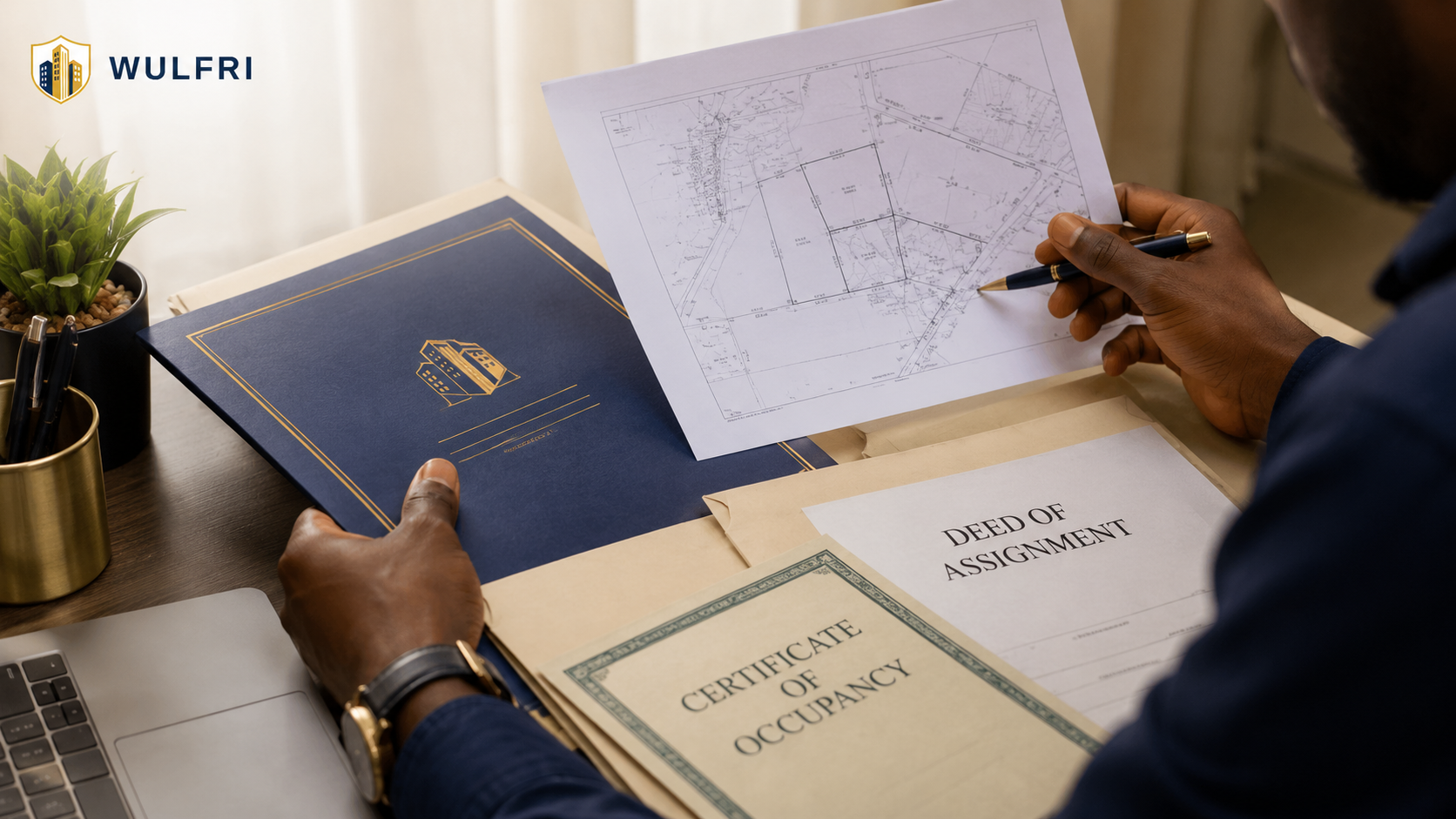
Certificate of Occupancy (C of O): An official instrument associated with a statutory right of occupancy. Check the holder's name, property description, certificate details and relevant government records.
Deed of Assignment: Records the transfer or assignment of an interest in land. Examine the parties, property description, transaction history and applicable consent or registration requirements.
Survey Plan: Identifies the land's location, boundaries, dimensions and coordinates. It helps establish whether the physical property corresponds with the land being offered.
Governor's Consent: Under section 22 of the Land Use Act, consent is generally required for specified transactions involving statutory rights of occupancy. The applicable requirements should be confirmed with a property lawyer.
Excision and Gazette: These documents may be relevant where land has been released from government acquisition or reservation. Verify the actual government records and establish that the specific parcel falls within the relevant boundaries.
Other documents may include allocation letters, Deeds of Conveyance, Powers of Attorney and probate documents, depending on the property's ownership history.
Remember: no single document should be treated as automatic proof that a seller has a valid and transferable interest.
2. Confirm the Seller's Ownership and Authority
Find out how the seller acquired the property and whether they have the legal authority to transfer it.
Ask about:
- The original owner or source of allocation.
- Previous purchases or transfers.
- Family or community ownership arrangements.
- Other people with interests in the property.
- Any pending disputes or court proceedings.
Where a property belongs to a family, estate or company, establish who is legally authorised to complete the transaction.
If someone is acting through a Power of Attorney, have your lawyer verify its validity and scope.
3. Conduct a Land Registry Search
Arrange an independent search at the relevant state Land Registry.
Depending on the available records and procedures, this may help establish:
- Registered ownership information.
- Title and instrument details.
- Previous transfers.
- Registered mortgages or encumbrances.
- Caveats and restrictions.
- Relevant government interests.
Do not rely exclusively on documents or search reports supplied by the seller.
A qualified property lawyer can help conduct and interpret the search. Remember that a registry search may not reveal every customary ownership dispute, physical boundary issue or pending claim.
4. Verify the Survey Plan
Engage a registered surveyor to examine the survey plan and confirm that it corresponds with the actual land.
Important checks include:
- Survey plan number.
- Surveyor's professional details.
- Coordinates and beacon information.
- Land dimensions and boundaries.
- Possible overlaps with neighbouring properties.
- Government acquisition or restricted areas.
Where available, use the relevant state's official survey verification service.
A verified survey plan helps identify land but does not independently establish ownership.
5. Inspect the Physical Property
Visit the land before committing to the purchase.
During the inspection:
- Confirm its actual location.
- Identify boundaries and beacons.
- Compare the land with the survey plan.
- Look for signs of occupation or competing possession.
- Check neighbouring developments and access roads.
- Investigate drainage, waterways and other physical restrictions.
Where necessary, involve your surveyor and lawyer.
Speaking with neighbouring landholders may provide useful background, but community enquiries should not replace official searches.
6. Investigate Government Restrictions and Disputes
Find out whether the land is affected by government acquisition, proposed infrastructure, planning restrictions or other public interests.
Depending on the location, investigate:
- Road alignments.
- Government acquisition or committed land.
- Drainage and environmental restrictions.
- Existing mortgages or encumbrances.
- Pending litigation.
- Family or community ownership disputes.
- Conflicting ownership claims.
Use the relevant state government authorities and professional advisers. Requirements and procedures vary across Nigeria.
7. Ensure All Documents Describe the Same Land
Compare the information across the title documents, deeds and survey plan.
Check that:
- Names of relevant parties are consistent.
- Property location and description correspond.
- Land dimensions are reasonably consistent.
- Survey details identify the correct parcel.
- The seller's ownership history is documented.
- Any discrepancies are properly explained and resolved.
A mismatch between documents should never be ignored simply because the seller offers an explanation.
8. Engage an Independent Property Lawyer
Before payment, appoint a qualified Nigerian property lawyer to review the documents and investigate the transaction.
Your lawyer should advise on:
- The legal interest being purchased.
- Ownership history and seller authority.
- Title searches and relevant consents.
- Existing encumbrances or disputes.
- The purchase agreement and transfer documents.
- Registration and completion requirements.
Independent professional advice is particularly important where ownership involves families, communities, companies or previous transactions.
Common Land-Buying Mistakes to Avoid
- Assuming a C of O automatically proves the seller's authority.
- Treating a survey plan as proof of ownership.
- Accepting an excision claim without checking official records.
- Relying only on photocopies supplied by the seller.
- Paying before completing due diligence.
- Ignoring physical inspection.
- Depending entirely on professionals appointed by the seller.
Avoid allowing urgency or promotional offers to replace proper verification.
Land Verification Checklist
Before paying for land, confirm that you have:
- Investigated the seller's identity and authority.
- Reviewed the property's ownership history.
- Examined the relevant title documents.
- Conducted an appropriate Land Registry search.
- Verified the survey plan with a qualified surveyor.
- Inspected the physical property.
- Investigated government restrictions.
- Checked for mortgages, disputes and competing claims.
- Resolved inconsistencies in the documents.
- Obtained independent legal advice.
Final Thoughts: Verify Before You Commit
Land ownership and documentation in Nigeria can involve complex legal and administrative processes. A document that appears genuine does not necessarily establish that the seller has a transferable interest or that the land is free from competing claims.
The safest approach is to combine official searches, professional surveying, physical inspection and independent legal advice before making payment.
At WULFRI, we believe better property decisions begin with better information. Explore published land and housing opportunities, compare your options and use practical tools to plan before you commit.
Disclaimer: This article provides general educational information, not legal advice. Land administration procedures vary by state and individual circumstances. Always obtain independent professional advice before completing a property transaction.
This article is general educational information, not legal or financial advice. Verify property, ownership, approvals and transaction terms independently with qualified professionals before making a decision.